


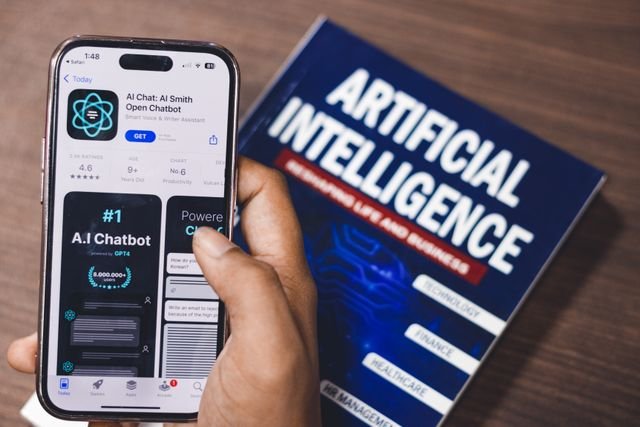
Artificial Intelligence (AI) is no longer a futuristic concept that exists only in science fiction movies. Today, AI is transforming industries worldwide, and digital marketing is one of the areas experiencing the biggest changes. Businesses of all sizes are using AI-powered tools to improve customer experiences, automate repetitive tasks, analyze data, and increase sales.
As technology continues to evolve, marketers are finding new ways to use AI to connect with their audiences more effectively. From personalized product recommendations and chatbots to automated content creation and predictive analytics, AI is becoming an essential part of modern marketing strategies.
But many people still ask: What is AI in digital marketing?
In simple terms, AI in digital marketing refers to the use of artificial intelligence technologies to improve marketing efforts through automation, data analysis, and intelligent decision-making. AI helps marketers understand customer behavior, deliver personalized experiences, and optimize campaigns for better results.
In this comprehensive guide, you will learn what AI in digital marketing is, how it works, its benefits, challenges, practical applications, and why it is shaping the future of online marketing.
What Is AI in Digital Marketing?
AI in digital marketing is the application of artificial intelligence technologies to marketing activities. It uses machine learning, natural language processing, predictive analytics, and automation tools to help businesses improve their marketing performance.
Traditionally, marketers relied heavily on manual research, data analysis, and decision-making processes. However, as the amount of online data has grown exponentially, it has become nearly impossible for humans to process and analyze everything efficiently.
This is where AI comes in.
Artificial intelligence can collect, process, and analyze vast amounts of data in real time. It can identify patterns, predict customer behavior, and recommend actions that help marketers achieve better results.
For example, AI can:
- Analyze customer purchasing behavior
- Recommend products to shoppers
- Create personalized email campaigns
- Optimize advertising budgets
- Generate content ideas
- Provide instant customer support
- Predict future sales trends
The primary goal of AI in digital marketing is to help businesses reach the right audience with the right message at the right time.
How AI Works in Digital Marketing
To understand what AI in digital marketing is, it is important to understand how AI works.
AI systems operate by collecting and analyzing data from multiple sources, including:
- Website traffic
- Social media engagement
- Search engine behavior
- Email interactions
- Customer purchases
- Mobile app activity
- Customer reviews
After collecting data, AI algorithms identify patterns and trends.
For instance, if a customer frequently searches for fitness products and purchases workout equipment, AI can recognize this behavior and recommend similar products.
Over time, AI systems learn from new information and become increasingly accurate. This process is known as machine learning.
Machine learning allows AI to improve continuously without needing constant human intervention.
Why AI Is Important in Digital Marketing
The digital marketing landscape has become highly competitive. Businesses need to deliver personalized experiences while managing large amounts of customer data.
AI helps solve these challenges by making marketing more efficient and effective.
Here are several reasons why AI is important in digital marketing: marketing statistics
Faster Data Analysis
AI can process millions of data points within seconds. What might take a marketing team weeks to analyze can often be completed by AI in minutes.
Improved Customer Experiences
Customers expect personalized experiences. AI helps businesses understand customer preferences and provide tailored recommendations.
Better Marketing Decisions
AI provides data-driven insights that help marketers make informed decisions rather than relying on assumptions.
Increased Efficiency
Automation reduces the time spent on repetitive tasks, allowing marketing teams to focus on strategy and creativity.
Higher Return on Investment
AI helps optimize campaigns, improve targeting, and increase conversion rates, leading to better ROI.
Benefits of AI in Digital Marketing
- Personalization at Scale
One of the biggest advantages of AI in digital marketing is personalization.
Consumers are more likely to engage with brands that understand their preferences and provide relevant recommendations.
AI enables businesses to personalize:
- Emails
- Website content
- Product recommendations
- Advertisements
- Search results
For example, online stores use AI to recommend products based on browsing history and previous purchases.
This level of personalization improves customer satisfaction and increases sales.
- Enhanced Customer Support
AI-powered chatbots have become increasingly popular.
These virtual assistants can:
- Answer frequently asked questions
- Assist customers with purchases
- Resolve basic issues
- Provide 24/7 support
Chatbots reduce response times and improve customer experiences while lowering support costs.
- Improved Advertising Performance
Advertising platforms such as Google and social media networks use AI algorithms to optimize ad delivery.
AI helps advertisers:
- Identify ideal audiences
- Adjust bids automatically
- Optimize campaign performance
- Improve ad targeting
As a result, businesses can achieve better results with lower advertising costs.
- Better Content Creation
AI writing tools have revolutionized content marketing.
These tools can help marketers create:
- Blog posts
- Product descriptions
- Email campaigns
- Social media content
- Ad copy
While human editing remains important, AI significantly speeds up content production.
- Predictive Analytics
Predictive analytics is one of the most powerful applications of AI.
By analyzing historical data, AI can predict future outcomes such as:
- Customer purchases
- Sales trends
- Lead conversions
- Customer churn
These predictions help businesses make proactive decisions.
- Marketing Automation
AI automates repetitive tasks, including:
- Email scheduling
- Social media posting
- Lead nurturing
- Customer segmentation
- Campaign reporting
Automation saves time and improves efficiency.
Common Applications of AI in Digital Marketing
AI Chatbots
Chatbots are among the most visible examples of AI in marketing.
Businesses use chatbots to:
- Engage website visitors
- Answer customer questions
- Generate leads
- Assist with purchases
Many modern chatbots use natural language processing to understand and respond to human conversations naturally.
Email Marketing
AI improves email marketing by:
- Personalizing messages
- Optimizing send times
- Segmenting subscribers
- Predicting customer behavior
This leads to higher open rates and increased engagement.
Content Marketing
AI tools assist content marketers by:
- Generating content ideas
- Creating article outlines
- Writing first drafts
- Improving SEO optimization
These tools help marketers produce content faster while maintaining quality.
Search Engine Optimization (SEO)
AI helps improve SEO by analyzing:
- Keywords
- Search trends
- Competitor strategies
- User intent
SEO professionals use AI tools to identify opportunities for improving search rankings.
Social Media Marketing
AI can analyze social media data to determine:
- Best posting times
- Audience preferences
- Trending topics
- Content performance
Marketers use these insights to improve engagement and reach.
Real-World Examples of AI in Digital Marketing
Amazon
Amazon uses AI extensively throughout its platform.
AI helps Amazon:
- Recommend products
- Predict customer purchases
- Personalize shopping experiences
- Optimize pricing
A significant portion of Amazon’s revenue comes from AI-powered recommendations.
Netflix
Netflix uses AI to analyze viewing habits and recommend content.
Each user receives personalized movie and TV show suggestions based on their preferences.
Spotify
Spotify’s recommendation engine uses AI to create personalized playlists and music suggestions.
Features like Discover Weekly rely heavily on machine learning algorithms.
Google Ads
Google Ads uses AI for:
- Smart bidding
- Audience targeting
- Ad optimization
- Campaign automation
This allows advertisers to improve performance with minimal manual adjustments.
Challenges of AI in Digital Marketing
Although AI offers many benefits, there are also challenges that businesses must consider.
Data Privacy Issues
AI relies heavily on customer data.
Businesses must ensure they comply with privacy regulations and protect customer information.
Failure to do so can damage trust and lead to legal consequences.
Dependence on Quality Data
AI systems require accurate and relevant data.
Poor-quality data can produce inaccurate insights and poor marketing decisions.
Implementation Costs
Some advanced AI solutions can be expensive.
Small businesses may face challenges when investing in enterprise-level AI tools.
Lack of Human Creativity
AI can generate content and automate tasks, but it cannot fully replace human creativity and emotional intelligence.
Successful marketing still requires human oversight and strategic thinking.
The Future of AI in Digital Marketing
The future of AI in digital marketing looks incredibly promising.
As technology advances, AI capabilities will continue to expand.
Some future trends include:
Hyper-Personalization
AI will deliver even more personalized customer experiences based on real-time behavior and preferences.
Voice Search Optimization
As voice assistants become more popular, businesses will use AI to optimize content for voice searches.
Advanced Predictive Analytics
AI will become even better at forecasting customer behavior and market trends.
AI-Generated Content
Content creation tools will continue improving, allowing marketers to produce high-quality content more efficiently.
Visual Search Technology
AI-powered visual search will allow customers to find products using images instead of text searches.
Automated Customer Journeys
AI will automate entire customer journeys, providing personalized interactions at every stage of the buying process.
How Beginners Can Start Using AI in Digital Marketing
If you are new to AI, don’t worry. You don’t need advanced technical skills to get started.
Here are some simple ways beginners can begin using AI in digital marketing:
Use AI Writing Tools
AI writing tools can help create:
- Blog posts
- Product descriptions
- Social media captions
- Email content
Implement Chatbots
Adding a chatbot to your website can improve customer support and generate leads.
Automate Email Marketing
Many email marketing platforms include AI-powered features that improve campaign performance.
Use AI SEO Tools
SEO tools powered by AI can help you find keywords, optimize content, and improve search rankings.
Experiment with AI Advertising
Platforms like Google Ads offer AI-powered automation that helps improve ad performance.
Starting with these tools allows beginners to experience the benefits of AI without significant investment.
Best AI Tools for Digital Marketing in 2026
Some popular AI marketing tools include:
- ChatGPT
- Jasper AI
- Copy.ai
- Grammarly
- Surfer SEO
- Semrush AI Features
- HubSpot AI
- Canva AI
- Google Ads Smart Campaigns
- Mailchimp AI Tools
These platforms help marketers save time and improve results across various marketing channels.
Conclusion
So, what is AI in digital marketing?
AI in digital marketing is the use of artificial intelligence technologies to automate marketing tasks, analyze customer data, personalize user experiences, and improve campaign performance.
From chatbots and content creation to predictive analytics and advertising optimization, AI is changing the way businesses connect with their audiences. It helps marketers make smarter decisions, save time, reduce costs, and achieve better results.
As we move further into 2026 and beyond, AI will continue to play a central role in digital marketing. Businesses that embrace AI today will be better positioned to stay competitive, improve customer experiences, and drive long-term growth.
Whether you’re a beginner, business owner, blogger, affiliate marketer, or digital marketing professional, understanding and leveraging AI can provide a significant advantage in today’s rapidly evolving online marketplace.
Also read: Best Affiliate Programs for Beginners in 2026: Complete Guide to Starting Affiliate Marketing